• Reset your password

User account menu

  • Log in
Home
PANDA EXPERIMENT

Main navigation

  • Home
  • Collaboration
    • Governance rules
    • Boards
      • Collaboration Board
      • Management Board
      • Young Scientist Convent
      • Finance Board
      • Technical Board
      • Theory Advisory Group
      • Physics Committee
      • Publication Committee
      • Speakers Committee
      • Membership Committee
      • Computing Committee
      • Award Committee
    • Contact
    • PhD Prize
    • Theory PhD Prize
    • Services
      • ASICs DB
      • FEMC Production DB
      • PANDA Forum
      • Pandamine
      • PANDA repository
      • PANDA Wiki
      • Storage cluster usage
      • CERN EDMS
    • Links
    • Logos
  • Physics
    • Hadron spectroscopy
    • Hadrons in matter
    • Hypernuclei
    • Nucleon structure
  • Detectors
    • PANDA detector
    • Magnets
    • Tracking
    • Calorimetry
    • Forward
    • Particle ID
    • Target and Beam
  • Documents
    • Publication list

Proceedings (PRO)

Breadcrumb

  • Home
  • Proceedings (PRO)

Recent news

Workshop Proton Beams at SIS100

Workshop „Physics Opportunities with Proton Beams at SIS100” was held in Wuppertal
Physicist of the week

Meike Küßner is DPG female physicist of calendar week 30 in 2023!

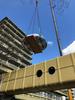
Endcap travel

Forward Endcap travels to Jülich

+++ Publication list +++
+++ Job Market +++

Subscribe to Recent news

PANDA meetings


30/03-01/04 2026 CM26/1 at Bonn
24/11-26/11 2025 CM25/2 at GSI
16/06-18/06 2025 CM 25/1 at GSI


Upcoming events

DPG Spring Meeting 2026
15 March, 2026 - 20 March, 2026


FAIR logo

GSI logo


Old website


R&D for the PANDA Barrel DIRC
M. Patsyuk for the PANDA Cherenkov Group
j.schwiening
PA-PRO-2013-001.pdf (1.18 MB)
N/A
Paper
Proceedings (PRO)
Detector hardware
Thursday, July 11, 2013 - 12:00
The PANDA experiment at the new Facility for Anti-proton and Ion Research in Europe (FAIR)
at GSI, Darmstadt, will study fundamental questions of hadron physics and QCD using high intensity
cooled anti-proton beams with momenta between 1:5 and 15 GeV/c. Efficient Particle
Identification (PID) for a wide momentum range and the full solid angle is required for reconstructing
the various physics channels of the PANDA program. Hadronic PID in the barrel region
of the detector will be provided by a DIRC (Detector of Internally Reflected Cherenkov light)
counter. The design is based on the successful BABAR DIRC with important improvements,
such as focusing optics and fast photon timing. A detailed detector simulation is performed using
Geant. A reconstruction algorithm was developed to quantify the performance of different design
options in terms of single photon Cherenkov angle resolution and photon yield. Several geometrical
improvements, including different radiator geometries and optics, were tested in particle
beams at GSI and CERN. In this contribution simulation and reconstruction, the design options,
and performance of the detector prototype will be discussed.
PA-PRO-2013-001: R&D for the PANDA Barrel DIRC
Status of the PANDA Barrel DIRC
Jochen Schwiening for the PANDA Cherenkov Group
j.schwiening
PA-PRO-2014-020.pdf (3.63 MB)
N/A
Paper
Proceedings (PRO)
Detector hardware
Wednesday, May 28, 2014 - 12:00
The PANDA experiment at the future Facility for Antiproton and Ion Research in Europe GmbH (FAIR) at GSI, Darmstadt will study fundamental questions of hadron physics and QCD using high-intensity cooled antiproton beams with momenta between 1.5 and 15 GeV/c. Hadronic PID in the barrel region of the PANDA detector will be provided by a DIRC (Detection of Internally Reflected Cherenkov light) counter. The design is based on the successful BABAR DIRC with several key improvements, such as fast photon timing and a compact imaging region. Detailed Monte Carlo simulation studies were performed for DIRC designs based on narrow bars or wide plates with a variety of focusing solutions. The performance of each design was characterized in terms of photon yield and single photon Cherenkov angle resolution and a maximum likelihood approach was used to determine the π/K separation. Selected design options were implemented in prototypes and tested with hadronic particle beams at GSI and CERN. This article describes the status of the design and R&D for the PANDA Barrel DIRC detector, with a focus on the performance of different DIRC designs in simulation and particle beams.
PA-PRO-2014-020: Status of the PANDA Barrel DIRC
Prototyping the PANDA Barrel DIRC
Carsten Schwarz for the PANDA Cherenkov Group
c.schwarz
PA-PRO-2014-019.pdf (512.17 KB)
N/A
Paper
Proceedings (PRO)
Detector hardware
Monday, December 1, 2014 - 12:00
The design of the Barrel DIRC detector for the future PANDA experiment at FAIR contains several important improvements compared to the successful BABAR DIRC, such as focusing and fast timing. To test those improvements as well as other design options a prototype was build and successfully tested in 2012 with particle beams at CERN. The prototype comprises a radiator bar, focusing lens, mirror, and a prism shaped expansion volume made of synthetic fused silica. An array of micro-channel plate photomultiplier tubes measures the location and arrival time of the Cherenkov photons with sub-nanosecond resolution. The development of a fast reconstruction algorithm allowed to tune construction details of the detector setup with test beam data and Monte-Carlo simulations.
PA-PRO-2014-019: Prototyping the PANDA Barrel DIRC
Simulation and reconstruction of the PANDA Barrel DIRC
R. Dzhygadlo for the PANDA Cherenkov Group
r.dzhigadlo
N/A
Paper
Proceedings (PRO)
Detector software
Monday, December 1, 2014 - 12:00
Hadronic particle identification (PID) in the barrel region of the PANDA experiment at the new Facility for Antiproton and Ion Research in Europe (FAIR) at GSI, Darmstadt will be provided by a DIRC (Detection of Internally Reflected Cherenkov light) counter. To optimize the performance and reduce the detector cost, detailed simulations of different design elements, such as the width of the radiators, the shape of the expansion volume, and the type of focusing system, were performed using Geant. Custom reconstruction algorithms were developed to match the detector geometry. We will discuss the single photon resolution and photon yield as well as the PID performance for the Barrel DIRC baseline design and several detector design options.
PA-PRO-2014-018: Simulation and reconstruction of the PANDA Barrel DIRC
The PANDA Barrel DIRC detector
Matthias Hoek for the PANDA Cherenkov Group
hoek@uni-mainz.de
N/A
Paper
Proceedings (PRO)
Detector hardware
Monday, December 1, 2014 - 12:00
The PANDA experiment at the new Facility for Antiproton and Ion Research in Europe (FAIR) at GSI, Darmstadt, will study fundamental questions of hadron physics and QCD using high-intensity cooled antiproton beams with momenta between 1.5 and 15 GeV/c. Efficient Particle Identification for a wide momentum range and the full solid angle is required for reconstructing the various physics channels of the PANDA program. Hadronic Particle Identification in the barrel region of the detector will be provided by a DIRC counter. The design is based on the successful BABAR DIRC with important improvements, such as focusing optics and fast photon timing. Several of these improvements, including different radiator geometries and optics, were tested in particle beams at GSI and at CERN. The evolution of the conceptual design of the PANDA Barrel DIRC and the performance of complex prototypes in test beam campaigns will be discussed.
PA-PRO-2014-017: The PANDA Barrel DIRC detector
The PANDA Barrel DIRC
R. Dzhygadlo for the PANDA Cherenkov Group
r.dzhigadlo
PA-PRO-2016-014.pdf (4.12 MB)
N/A
Paper
Proceedings (PRO)
Detector hardware
Friday, May 13, 2016 - 12:00
The PANDA detector at the international accelerator Facility for Antiproton and Ion
Research in Europe (FAIR) addresses fundamental questions of hadron physics. Experiments concerning
charmonium spectroscopy, the search for hybrids and glueballs and the interaction of hidden
and open charm particles with nucleons and nuclei will be performed with antiproton beams
impinging on hydrogen or nuclear targets. Cooled beams allow the precision scan of resonances in
formation experiments. The momentum range of the antiproton beam between 1.5 GeV/c and 15
GeV/c tests predictions by perturbation theory and will reveal deviations originating from strong
QCD. An excellent hadronic particle identification will be accomplished by DIRC (Detection of
Internally Reflected Cherenkov light) counters. The design for the barrel region is based on the successful
BABAR DIRC with several key improvements, such as fast photon timing and a compact
imaging region. DIRC designs based on different radiator geometries with several focusing options
were studied in simulation. The performance of each design was characterized in terms of photon
yield and single photon Cherenkov angle resolution. Selected design options were implemented in
prototypes and tested with hadronic particle beams at GSI and CERN.
PA-PRO-2016-014: The PANDA Barrel DIRC
The PANDA DIRC Detectors at FAIR
Carsten Schwarz for the PANDA Cherenkov Group
c.schwarz
PA-PRO-2017-014.pdf (823.89 KB)
N/A
Paper
Proceedings (PRO)
Detector hardware
Tuesday, July 4, 2017 - 12:00
The PANDA detector at the international accelerator Facility for Antiproton and Ion Research
in Europe (FAIR) addresses fundamental questions of hadron physics. An excellent hadronic
particle identification (PID) will be accomplished by two DIRC (Detection of Internally Reflected
Cherenkov light) counters in the target spectrometer. The design for the barrel region covering polar
angles between 22deg to 140deg is based on the successful BABAR DIRC with several key improvements,
such as fast photon timing and a compact imaging region. The novel Endcap Disc DIRC
will cover the smaller forward angles between 5deg (10deg) to 22deg in the vertical (horizontal) direction.
Both DIRC counters will use lifetime-enhanced microchannel plate PMTs for photon detection in
combination with fast readout electronics. Geant4 simulations and tests with several prototypes
at various beam facilities have been used to evaluate
PA-PRO-2017-014: The PANDA DIRC Detectors at FAIR C.
The Barrel DIRC Detector for the PANDA Experiment at FAIR
R. Dzhygadlo, A. Ali, A. Belias, A. Gerhardt, K. Götzen, G. Kalicy, M. Krebs, D. Lehmann, F. Nerling, M. Patsyuk, K. Peters, G. Schepers, L. Schmitt, C. Schwarz, J. Schwiening, M. Traxler, M. Zühlsdorf, M. Böhm, A. Britting, W. Eyrich, A. Lehman, M. Pfaffinger, F. Uhlig, M. Dueren, E. Etzelmueller, K. Föhl, A. Hayrapetyan, K. Kreutzfeld, B. Kröck, O. Merle, J. Rieke, M. Schmidt, T. Wasem, P. Achenbach, M. Cardinali, M. Hoek, W. Lauth, S. Schlimme, C. Sfienti, and M. Thiel
r.dzhigadlo
PA-PRO-2018-007.pdf (832.34 KB)
Paper
Proceedings (PRO)
Detector hardware
Tuesday, August 21, 2018 - 12:00
Charged particle identification in the barrel region of the PANDA target spectrometer will be delivered by a Barrel DIRC detector. The design of the Barrel DIRC has been developed using Monte-Carlo simulation and validated with a full-scaled prototype in particle beams. It features the narrow radiators made of synthetic fused silica, focusing optics with 3-layer spherical lenses, and a compact prism-shaped expansion volume instrumented with MCP-PMTs.
PA-PRO-2018-007: The Barrel DIRC Detector for the PANDA Experiment at FAIR
The PANDA Barrel DIRC
Jochen Schwiening for the PANDA Cherenkov Group
j.schwiening
PA-PRO-2018-006.pdf (7.24 MB)
N/A
Paper
Proceedings (PRO)
Detector hardware
Tuesday, April 3, 2018 - 12:00
The PANDA experiment at the international accelerator Facility for Antiproton and Ion Research in
Europe (FAIR) near GSI, Darmstadt, Germany will address fundamental questions of hadron physics.
Excellent Particle Identification (PID) over a large range of solid angles and particle momenta will be essential
to meet the objectives of the rich physics program. Charged PID for the barrel region of the PANDA target
spectrometer will be provided by a DIRC (Detection of Internally Reflected Cherenkov light) detector.
The Barrel DIRC will cover the polar angle range of 22-140deg and cleanly separate charged pions from
kaons for momenta between 0.5 GeV/c and 3.5 GeV/c with a separation power of at least 3 standard
deviations. The design is based on the successful BABAR DIRC and the SuperB FDIRC R&D with several
important improvements to optimize the performance for PANDA, such as a focusing lens system, fast
timing, a compact fused silica prism as expansion region, and lifetime-enhanced Microchannel-Plate PMTs
for photon detection.
This article describes the technical design of the PANDA Barrel DIRC and the result of the design
validation using a \vertical slice" prototype in hadronic particle beams at the CERN PS.
PA-PRO-2018-006: The PANDA Barrel DIRC
The Electromagnetic Calorimeter for the PANDA Target Spectrometer
Markus Moritz, K.-Th. Brinkmann, V. Dormenev, R.-W. Novotny, A. Ryazantsev, H.-G. Zaunick
markus.moritz@exp2.physik.uni-giessen.de
PA-PRO-2018-005.pdf (15.09 MB)
Paper
Proceedings (PRO)
Detector hardware
Friday, July 27, 2018 - 12:00
The future PANDA experiment with a next generation detector will focus on
hadron spectroscopy. It will use cooled anti-proton beams with a momentum between 1.5
GeV/c and 15 GeV/c interacting with various targets. This allows to directly form all states
of all quantum numbers and measure their widths with an accuracy of a few tens of keV.
The experiment will be located at the exceptional Facility for Anti-proton and Ion Research in
Germany, which is currently under construction. The electromagnetic target calorimeter of the
PANDA experiment has the challenging aim to detect high energy photons with excellent energy
resolution over the full dynamic range from 15 GeV down to a few tens of MeV within a 2 T
solenoid. The target calorimeter itself is divided into a barrel and two endcaps. The individual
crystals will be read out with two precisely matched large area avalanche photo diodes. In the
very inner part of the forward endcap vacuum phototetrodes will be used instead. To reach the
demands of the experiment, improved PbWO 4 scintillator crystals, cooled down to −25 ◦ C have
been chosen. They provide a fast decay time for highest count rates, short radiation length
for compactness, improved light yield for lowest thresholds and excellent radiation hardness [1].
The main part of the 15.740 crystals needed have been produced by the Bogoroditsk Plant of
Technochemical Products in Russia. After stopping their business, a new potential producer for
the missing 41% of crystals have been found. The company Crytur in Czech Republic provided
150 promising preproduction crystals so far. Except some of the very first produced crystals,
all samples exceed the required high quality parameters. Most of them have already been used
for the first major assem
PA-PRO-2018-005: The Electromagnetic Calorimeter for the PANDA Target Spectrome…
Pagination
  • Previous page ‹‹
  • Page 5
  • Next page ››
Subscribe to Proceedings (PRO)

Imprint

Data privacy protection

Powered by Drupal

Copyright © 2026 PANDA collaboration - All rights reserved

Operated by Udo