• Reset your password

User account menu

  • Log in
Home
PANDA EXPERIMENT

Main navigation

  • Home
  • Collaboration
    • Governance rules
    • Boards
      • Collaboration Board
      • Management Board
      • Young Scientist Convent
      • Finance Board
      • Technical Board
      • Theory Advisory Group
      • Physics Committee
      • Publication Committee
      • Speakers Committee
      • Membership Committee
      • Computing Committee
      • Award Committee
    • Contact
    • PhD Prize
    • Theory PhD Prize
    • Services
      • ASICs DB
      • FEMC Production DB
      • PANDA Forum
      • Pandamine
      • PANDA repository
      • PANDA Wiki
      • Storage cluster usage
      • CERN EDMS
    • Links
    • Logos
  • Physics
    • Hadron spectroscopy
    • Hadrons in matter
    • Hypernuclei
    • Nucleon structure
  • Detectors
    • PANDA detector
    • Magnets
    • Tracking
    • Calorimetry
    • Forward
    • Particle ID
    • Target and Beam
  • Documents
    • Publication list

Physics analysis

Breadcrumb

  • Home
  • Physics analysis

Recent news

Workshop Proton Beams at SIS100

Workshop „Physics Opportunities with Proton Beams at SIS100” was held in Wuppertal

Physicist of the week

Meike Küßner is DPG female physicist of calendar week 30 in 2023!

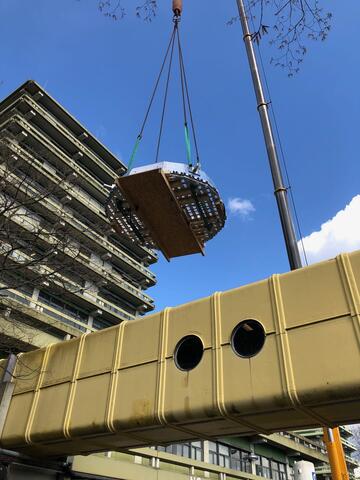
Endcap travel

Forward Endcap travels to Jülich

+++ Publication list +++
+++ Job Market +++

Subscribe to Recent news

PANDA meetings


09/11-11/11 2026 CM26/2 at GSI
30/03-01/04 2026 CM26/1 at Bonn
24/11-26/11 2025 CM25/2 at GSI
16/06-18/06 2025 CM 25/1 at GSI


Upcoming events

INSTR 2026
12 October, 2026 - 16 October, 2026
Asia-Europe-Pacific School of High-Energy Physics (AEPSHEP2026)
14 October, 2026 - 27 October, 2026
10th International Symposium on Heavy Flavor Production in Hadron and Nuclear Collisions (HF-HNC 2026)
26 October, 2026 - 29 October, 2026
Quark Matter 2027
21 March, 2027 - 27 March, 2027


FAIR logo

GSI logo


Old website


E.g. a partial wave analysis of a channel

Feasibility Study of Z(4430) Exotic State at PANDA Experiment
Umut Keskin
umutkeskin59@gmail.com
PANDOC-5603-Thesis-2024-20260911_215323.pdf (27.95 MB)
Thesis
Phd (PHD)
Detector software
Physics analysis
Monday, September 30, 2024 - 12:00
Up until now, elementary particles and their interactions have been satisfactorily characterised by the Standard Model (SM) of particle physics. But a lot of difficult questions remain unanswered. At high energy frontiers like the LHC at CERN, some of these are being researched. The high precision/high intensity frontier made possible by exclusive observations of hadronic reactions at intermediate energies offers an alternative strategy. The upcoming antiProton ANnihilation at DArmstadt (PANDA) experiment at FAIR will utilise antiproton-nucleus and antiproton-proton interactions as diagnostic tools. The PANDA experiment may be used to analyse the spectra of many different particles. Z(4430) is among the most significant of the many XYZ states and they are being examined in numerous global experiments, such as BESIII, Belle, BaBaR, and LHCb. Therefore, integrating this research into the PANDA framework and utilising PANDA software to work with this subject is a crucial challenge for the PANDA experiment pertaining to charmonium and exotics. Z(4430) can potentially provide more precise information on mass, width, and other parameters in the PANDA detector spectrum when the entire simulation offered by the PANDA software chain is utilised. To test this, the thesis study titled "Feasibility Study of Z(4430) Exotic State at PANDA Experiment" was designed with the aim of determine whether Z(4430) is feasible in the PANDA detector spectrum. Consequently, according to the results of this study, Z(4430) is shown to be observable in the framework of the PANDA experiment.
https://panda.gsi.de/content/forum-pandoc-5603-thesis-2024
Feasibility Studies towards Accessing Generalised Distribution Amplitudes in Exclusive γ-Meson and γγ Production with PANDA at FAIR
Faiza Khalid
faiza.khalid@exp2.physik.uni-giessen.de
PANDOC-5585-Thesis-2025-20260608_171741.pdf (18.42 MB)
Thesis
Phd (PHD)
Physics analysis
Thursday, September 11, 2025 - 12:00
https://panda.gsi.de/content/forum-pandoc-5585-thesis-2025
Feasibility Studies for the Optimization of the PANDA Detector for the Identification of the Glueball Candidate X(2370)
Moritz Terwissen
m.fritsch
PANDOC-5571-Thesis-2025-20260304_172907.pdf (6.1 MB)
Thesis
Master (MAS)
Physics analysis
Monday, November 24, 2025 - 12:00
Strangeness Studies with HADES within the FAIR Phase-0 Program
Jenny Taylor
Talk
Workshop (WKS)
Hadron in Nucleus 2025 (HIN25)
Physics analysis
Wednesday, April 2, 2025 - 12:00
Hyperons serve as powerful probes for investigating various aspects of quantum chromodynamics (QCD). As part of the FAIR Phase-0 program, the HADES (High-Acceptance Di-Electron Spectrometer) at GSI collected high-statistics proton-proton data using a proton beam with a kinetic energy of 4.5 GeV. The beam energy enables the production of hyperons close to threshold, facilitating studies of hyperon-hyperon interactions and searches for intermediate resonances. Currently, the ΛΛ reaction is being analyzed to extract crucial information on hyperon interactions, which is expected to be essential to understand the interiors of neutron stars. Furthermore, the first-time measurements of the Dalitz decay of the Σ0 will provide insights into transition form factors and thereby the electromagnetic structure of the Σ0. The study of Ξ- production in proton-proton collisions is valuable to address the observed excess yields observed in Ar+KCl and p+Nb reactions at HADES. This talk will highlight the ongoing hyperon physics analyses at HADES within the FAIR Phase-0 program and present selected results.
TA-WKS-2025-001: Strangeness Studies with HADES within the FAIR Phase-0 Program
PANDA Annual Report 2023
K. Peters
k.peters
RE-PRO-2024-001.pdf (14.66 MB)
Report
Progress Report (PRO)
Detector hardware
Detector software
Physics analysis
Monday, June 24, 2024 - 12:00
PANDA Annual Report 2023
RE-PRO-2024-001: PANDA Annual Report 2023
Hyperon physics with antiproton beams
Karin Schönning
karin.schonning@physics.uu.se
Talk
Workshop (WKS)
FuPhy2024 - Future Nuclear and Hadronic Physics at the CERN-AD
Physics analysis
Wednesday, April 10, 2024 - 12:00
The abundant production of hyperons in antiproton-proton annihilations open new avenues in the investigations of strong interactions and fundamental symmetries. In recent years, the BESIII experiment has demonstrated the merits of studying spin polarised and correlated hyperon-antihyperon pairs with several pioneering measurements of hyperon structure and precise tests of CP conservation.
With a beam of stored antiprotons, the PANDA experiment can take hyperon physics to a new level, benefitting from the expected huge samples of hyperon-antihyperon pairs. In this talk, I will discuss the potential of hyperon physics with PANDA in particular but also with antiproton beams in general.

TA-WKS-2024-014: Hyperon physics with antiproton beams
Studying the hadron structure with PANDA and CLAS using machine learning techniques
Aron Kripko
a.kripko
PANDOC-3402-Thesis-2024-20250312_164918.pdf (20.8 MB)
Thesis
Phd (PHD)
Detector software
Physics analysis
Friday, February 16, 2024 - 12:00
The hadron spectroscopy and structure are currently very active fields of research to study the non-perturbative regime of quantum chronodynamics. The first one studies the complex structure of excited hadrons by looking at their decay products, while the latter uses lepton scattering on nucleons. Both methods require reconstruction algorithms with great efficiency and good particle identification and background rejection rates. This work aims to provide these by either improving the existing methods or developing new ones.

The first part of this document presents a feasibility study of a predicted hybrid charmonium state for the $\mathrm{\overline{P}}$ANDA experiment. Lattice QCD calculations predict the ground state hybrid charmonium to be a spin exotic with quantum numbers of $J^{PC}=1^{-+}$ at a mass of around 4.3 GeV with a width to be around 20 MeV. A machine learning based data analysis scheme is proposed to further improve the signal efficiency and the background reduction, alongside with improvements of the analysis software (PandaRoot), that are vital for this study. These improvements include a reworked clustering algorithm for the electromagnetic calorimeter (EMC) and an optimized monte carlo matching for neutral particles.

The second part of this document is about studying the proton structure. A multidimensional study of the structure function ratio $\mathrm{F_{LU}^{sin(\phi)}/F_{UU}}$ has been performed for K$^\mathrm{\pm}$, based on the measurement of beam-spin asymmetries. It uses the high statistics data recorded with the CLAS12 spectrometer at Jefferson Laboratory. $\mathrm{F_{LU}^{sin(\phi)}}$ is a twist-3 quantity that provides information about the quark gluon correlations in the proton. This document will present for the first time a simultaneous analysis of two kaon channels over a large kinematic range of $z$, $x_B$, $P_T$ and $Q^2$ with virtualities $Q^2$ ranging from 1 GeV$^2$ up to 8 GeV$^2$ using machine learning techniques for improved particle identification.
TH-PHD-2024-001: Studying the hadron structure with PANDA and CLAS using machin…
Heavy Quarkonium Spectroscopy with PANDA
Johan Messchendorp
j.messchendorp
TA-WKS-2022-040.pdf (10.85 MB)
Talk
Workshop (WKS)
QWG2022
Physics analysis
Monday, September 26, 2022 - 12:00
TA-WKS-2022-040: Heavy Quarkonium Spectroscopy with PANDA
Status and physics prospects at PANDA
Johan Messchendorp
TA-CON-2022-033.pdf (28.78 MB)
Talk
Conference (CON)
IPA2022
Physics analysis
Tuesday, September 6, 2022 - 12:00
-
TA-CON-2022-033: Status and physics prospects at PANDA
Development of an online track finding algorithm for the PANDA Luminosity Detector and search for the decay channel e+e- -> hc eta pi pi at the center of mass energy of 4.6 GeV at BESIII
Stephan Maldaner
maldaner@kph.uni-mainz.de
TH-PHD-2020-007.pdf (10.33 MB)
Thesis
Phd (PHD)
Detector hardware
Physics analysis
Tuesday, December 29, 2020 - 12:00
TH-PHD-2020-007: Development of an online track finding algorithm for the PANDA…
Pagination
  • Page 1
  • Next page ››
Subscribe to Physics analysis

Imprint

Data privacy protection

Powered by Drupal

Copyright © 2026 PANDA collaboration - All rights reserved

Operated by Udo