• Reset your password

User account menu

  • Log in
Home
PANDA EXPERIMENT

Main navigation

  • Home
  • Collaboration
    • Governance rules
    • Boards
      • Collaboration Board
      • Management Board
      • Young Scientist Convent
      • Finance Board
      • Technical Board
      • Theory Advisory Group
      • Physics Committee
      • Publication Committee
      • Speakers Committee
      • Membership Committee
      • Computing Committee
      • Award Committee
    • Contact
    • PhD Prize
    • Theory PhD Prize
    • Services
      • ASICs DB
      • FEMC Production DB
      • PANDA Forum
      • Pandamine
      • PANDA repository
      • PANDA Wiki
      • Storage cluster usage
      • CERN EDMS
    • Links
    • Logos
  • Physics
    • Hadron spectroscopy
    • Hadrons in matter
    • Hypernuclei
    • Nucleon structure
  • Detectors
    • PANDA detector
    • Magnets
    • Tracking
    • Calorimetry
    • Forward
    • Particle ID
    • Target and Beam
  • Documents
    • Publication list

Detector hardware

Breadcrumb

  • Home
  • Detector hardware

Recent news

Workshop Proton Beams at SIS100

Workshop „Physics Opportunities with Proton Beams at SIS100” was held in Wuppertal

Physicist of the week

Meike Küßner is DPG female physicist of calendar week 30 in 2023!

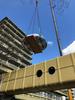
Endcap travel

Forward Endcap travels to Jülich

+++ Publication list +++
+++ Job Market +++

Subscribe to Recent news

PANDA meetings


09/11-11/11 2026 CM26/2 at GSI
30/03-01/04 2026 CM26/1 at Bonn
24/11-26/11 2025 CM25/2 at GSI
16/06-18/06 2025 CM 25/1 at GSI


Upcoming events

28th Conference on Computing in High Energy and Nuclear Physics (CHEP 2026)
25 May, 2026 - 29 May, 2026
Hadron Physics with AntiMatter Probes (HAMP 2026)
23 June, 2026 - 24 June, 2026
Asia-Europe-Pacific School of High-Energy Physics (AEPSHEP2026)
14 October, 2026 - 27 October, 2026
10th International Symposium on Heavy Flavor Production in Hadron and Nuclear Collisions (HF-HNC 2026)
26 October, 2026 - 29 October, 2026


FAIR logo

GSI logo


Old website


E.g. construction of detector component electronics

Studies of SiPM photosensors for time-of-flight detectors within PANDA at FAIR
Lukas Gruber
l.gruber
TH-PHD-2014-004.pdf (35.19 MB)
Thesis
Phd (PHD)
Detector hardware
Monday, December 1, 2014 - 12:00
The PANDA experiment at FAIR is a planned particle physics experiment dedicated to strong interaction studies using proton-antiproton annihilations. The PANDA time-of-flight (TOF) system is foreseen as a Scintillator Tile (SciTil) Hodoscope, which will deliver valuable input for event timing and particle identification. The proposed detector is based on small plastic scintillator tiles with a size of about 30 x 30 x 5 mm³, which are read-out with directly attached Silicon Photomultipliers (SiPMs). The whole system is composed of 5760 scintillator tiles and twice the number of photodetectors, covering an area of about 5.2 m² in total. The requirements for the detector are a time resolution in the order of 100 ps sigma and a minimum use of material due to the limited space inside the PANDA spectrometer.

SiPMs are extremely versatile photodetectors which tend to successively replace the ordinary vacuum Photomultiplier Tubes (PMTs) in many of the photosensing demands ranging from particle physics to medical imaging. Due to many advantages like good time resolution, high photon detection efficiency (PDE), compactness, low operating voltage, radiation hardness, low cost and, in contrast to PMTs, insensitivity to magnetic fields, SiPMs are well suited for applications in high energy physics like PANDA. Recently, Philips invented the first fully digital SiPM (DPC), which allows to exploit the quasi digital nature of single photon detection. The analog and digital SiPM, respectively, are the main detector technologies used within this work.

This thesis describes a detailed study of SiPM properties in order to characterize the new devices and get a profound understanding of their functionality. The characterization studies have been carried out using various experimental setups employing pulsed pico- and femtosecond lasers. With regard to applications in high energy physics experiments, e.g. the PANDA TOF system, parameters like SiPM gain, dark count rate, time resolution, dynamic range and recovery time as well as their temperature dependence have been investigated. In this context, the time resolution of conventional analog SiPMs and of the digital SiPM is discussed. Using SiPMs with some technology against cross-talk and after-pulses, e.g. trenches between pixels, led to larger operating ranges and better overall performance. The presented results show that SiPMs are well suited for usage in the SciTil system.

For the further development of a scintillator based detector suitable for PANDA, a detailed optimization study including parameters like the scintillator material and size, the photodetector position, type and quantity as well as the electronics threshold has been carried out. The aim was to find out how the individual parameters contribute to the time resolution of a scintillator based TOF detector and to finally achieve the goal of a time resolution below 100 ps sigma. In this context, also the statistics of photon emission as well as the photon propagation in a plastic scintillator are studied. Comparing different types of plastic scintillators showed that the scintillation time constants as well as the intrinsic light yield influence the time resolution. In this context, it was shown that scintillators for highest time resolution should provide short rise- and decay times and highest light output, as expected from theory. The geometry of the scintillator affects the time resolution as it defines the impact of photon propagation. Increasing the scintillator size led to reduced time resolution. In a basic measurement setup using a Sr90 source and an EJ-228 plastic scintillator read-out with the Philips DPC, a time resolution of sigma = 62.3 ± 0.8 ps could be eventually achieved.

To finally proof the feasibility of reaching a time resolution of 100 ps sigma with the proposed scintillator tiles, a prototype SciTil detector based on the optimization studies has been developed and tested in a 2.7 GeV/c proton beam. Results of the beam test experiment at Forschungszentrum Jülich are presented. In course of the measurement, various commercially available SiPMs with 3 x 3 mm² sensitive area as well as the Philips DPC have been employed in combination with different types of fast plastic scintillators. The data analysis showed that energy deposit fluctuations and variations in the number of detected photons have a big influence on the time resolution due to the time slewing effect. It is shown that applying appropriate corrections leads to drastic improvement in time resolution and values well below 100 ps sigma can be achieved. Using two KETEK SiPMs (PM3360TS) attached to an EJ-232 plastic scintillator, a time resolution of sigma = 82.5 ± 1.7 ps was obtained. Employing the Philips DPC, a value of sigma = 35.4 ± 0.4 ps was found.

In order to further optimize the scintillation counters for the SciTil system, a simulation tool for scintillator based detectors using Geant4 has been developed. The simulation aims to provide a deeper understanding of the physical processes and will help to push the time resolution towards the limits and finalize the detector layout. Preliminary results on the detected number of photons and time resolution of a scintillator tile read-out with two photodetectors show that the simulation can already reproduce the trend of experimental results. In this context, the simulation confirms that a scintillation detector aiming at highest time resolution should make use of multiple time stamps.
TH-PHD-2014-004: Studies of SiPM photosensors for time-of-flight detectors with…
Technical Design Report for the PANDA Forward Spectrometer Calorimeter
PANDA Collaboration
pavel.semenov@ihep.ru
RE-TDR-2015-002.pdf (18.82 MB)
Report
Technical Design Report (TDR)
Detector hardware
Detector software
Physics analysis
Wednesday, February 24, 2016 - 12:00
RE-TDR-2015-002: Technical Design Report for the PANDA Forward Spectrometer Cal…
Entwicklung von Testsystemen zur Charakterisierung von Silizium-Streifendetektoren
Sebastian Krah
TH-DIP-2012-004.pdf (5.32 MB)
Thesis
Diploma (DIP)
Detector hardware
Thursday, November 1, 2012 - 12:00
In dieser Arbeit wurden verschiedene Testsysteme für die Charakterisierung von Silizium-Streifen-Detektoren entwickelt.
Conceptual Design of the PANDA Luminosity Monitor and Reconstruction Strategy to Measure the Width of the X(3872) State
Tsitohaina Hary Randriamalala
TH-PHD-2012-003.pdf (21.98 MB)
Thesis
Phd (PHD)
Detector hardware
Thursday, April 19, 2012 - 12:00
The PANDA experiment has a great potential to test QCD in the low momentum transfer region with unprecedented accuracy by performing very precise hadron spectroscopy. To achieve this goal the resonance scan method will be used to determine the mass and width of variety of hadronic states. This technique requires a precise knowledge of the luminosity. This thesis develops the conceptual design of the detector allowing to measure the absolute luminosity with about 3% precision.
The detector concept is based on the measurement of elastically scattered antiprotons from the interaction region in the Coulomb-nuclear interference region. Due to the finite beam emittance and the finite size of the interaction volume, the track of the antiproton has to be reconstructed in the luminosity monitor, and not just one point. The detector will located between z = +10 m and z= +13 m downstream of the interaction point and will consist of four planes of four sensors each covering the polar angular range of 2.8 < theta < 7.5 mrad. The performance study of this detector is one of the main topics of this thesis. These studies were done using Monte Carlo simulations within the PandaRoot framework and the results were compared with the measured data obtained from the tracking station beam test performed at COSY with proton beams.
This work then addressed the question of how the performance of the luminosity monitor effects the determination of the mass and width measurements of X(3872) state using the full PANDA setup. The measurements were performed for three different assumed widths.
The influences of the signal to background ratio and the uncertainty on the luminosity were investigated.
Triggerless hybrid pixel detector for the PANDA experiment and benchmark study of a psi(4040) decay
Laura Zotti
zotti@to.infn.it
TH-PHD-2014-002.pdf (36.9 MB)
Thesis
Phd (PHD)
Detector hardware
Friday, January 10, 2014 - 12:00
At the facility FAIR, now under construction as an extension of the GSI Laboratory, the PANDA experiment will play an important rule for the understanding of the strong interaction at intermediate energies. The PANDA apparatus is designed to allow a precise reconstruction of particles momenta and decay vertices; in this context the innermost tracker, the Micro Vertex Detector will play a fundamental rule.
Looking forward for the PANDA detector system, which shall operate in a selftriggering acquisition mode, the rst hybrid pixel prototypes were tested and a rst version of a triggerless data-managing framework was implemented. The experimental results obtained in two di erent beam tests will be presented.
Detailed MonteCarlo study of the pbarp->psi(4040) D*+ D*- decay chain were performed to test the potential reconstruction performance, the secondary vertices reconstruction capability and the hadronic background suppression.
Development and Applications of Tracking of Pellet Streams
Andrzej Pyszniak
TH-PHD-2015-001.pdf (19.16 MB)
Thesis
Phd (PHD)
Detector hardware
Detector software
Thursday, January 22, 2015 - 12:00
The development of a system for optical tracking of frozen hydrogen microsphere targets (pellets) was done. It is intended for the upcoming hadron physics experiment PANDA at FAIR, Darmstadt, Germany. Knowledge of the interaction position, obtained with this system, will improve background rejection, precision of particle track reconstruction and will also help distinguish between primary and secondary vertices. Investigations of pellet detection conditions and pellet stream parameters were performed at Uppsala Pellet Test Station located at The Svedberg Laboratory. Various illumination and detection conditions were checked and optimized. The gained knowledge has been used to develop Monte Carlo procedures simulating experiments with pellets. Then simulations of pellet tracking were carried out including the constraints from the PANDA setup. The performance of the tracking was checked for various pellet stream and pellet detection conditions. Two procedures of pellet track reconstruction were developed – a fast procedure and a high efficiency procedure. The studies were done for one tracking section (just below pellet generator) and for two sections (the second just above pellet dump) and showed that the resolution of the tracking system can be better than 100 μm (sigma) in each direction and that the interaction point will be reconstructed for 70-95% of hadronic events, for suitable pellet stream and detection conditions. Usage of pellet tracking information in the hadronic data analysis was discussed, concerning the data taking, particle track reconstruction together with the PANDA micro vertex detector, hadronic event classification and treatment of the various classes. Test measurements with the WASA setup at FZJ, Jülich, Germany were done to check how the information about the number of pellets in the accelerator beam region can be used in the hadronic data analysis. Instantaneous rates of WASA "elastic" triggers were used for classification of hadronic events as coming from pellets or from a background. The study clearly showed that one can distinguish between the two event classes. The study gave experience in using two different systems synchronized with each other – the experiment's DAQ and another system that works with a much longer time scale – similar to the pellet tracking system.
TH-PHD-2015-001: Development and Applications of Tracking of Pellet Streams
Design, Construction and Prototyping of the Silicon Strip Tracker for the Micro Vertex Detector of the PANDA Experiment
Hans-Georg Zaunick
PA-PRO-2014-015.pdf (695.01 KB)
Paper
Proceedings (PRO)
IEEE Nuclear Science Symposium and Medical Imaging Conference 2015
Detector hardware
Wednesday, December 17, 2014 - 12:00
The future PANDA-Experiment at the FAIR accelerator facility in Darmstadt/Germany utilizes an antiproton beam with momenta of 1.5 - 15 GeV/\boldmath$c$\unboldmath~incident on a hydrogen or heavy element fixed target. It addresses open questions concerning the strong interaction with one focus on high precision charmonium spectroscopy. The spatial and timing resolution in detecting fast-decaying particles e.g. in open-charm channels is crucial and requires the application of thin solid state detectors coupled with a fast untriggered readout electronics. The contribution will focus on the silicon microstrip tracker of the innermost subdetector, the Micro Vertex Detector (MVD), which is composed of double-sided silicon strip detectors (DSSDs). These are connected to ultra-thin flex modules carrying novel fast self-triggering front-end ASICs named PASTA. The construction of the DSSD modules, the carrier PCB and the architecture of the PASTA chip will be discussed as well as methods to qualify the sensors. An overview of the
prototypes developed and tested up to now is given together with the future steps to be taken in order to arrive at the mass production of the full-scale modules.
PA-PRO-2014-015: Design, Construction and Prototyping of the Silicon Strip Trac…
TDR for the PANDA Luminosity Detector
The PANDA collaboration
m.fritsch
RE-TDR-2015-001.pdf (13.51 MB)
Report
Technical Design Report (TDR)
Detector hardware
Detector software
Physics analysis
Saturday, August 1, 2015 - 12:00
This technical design report (TDR) illustrates the technical layout and the expected performance of the
luminosity detector (LMD) in the PANDA spectrometer. PANDA is an experiment performing physics measurements
in the high energy store ring (HESR) antiproton beam impinging on a crossing material target.
The LMD will reconstruct elastically scattered antiproton tracks to monitor the relative luminosity and to
extract the absolute luminosity mainly for absolute cross section measurements. We expect to determine the
luminosity with a precision better than 3%. However the accuracy of the systematic uncertainties coming
from the extraction method are expected to be better than 0.1%.
This document is divided into 7 chapters. First we motivate shortly the PANDA experiment and its setup.
Important aspects, specially of the FAIR accelerator complex, the PANDA target system and the PANDA
magnet setup, are pointed out from the view of the LMD as a basis for the understanding of the LMD design
and the expected performance.
The principles of the term luminosity and its measurement are topics of the Chapter 2. The fundamental
understanding of antiproton proton elastic scattering is the basis for the high precision extraction of the
luminosity. The physics model is discussed which is parametrized with experimental data. It is currently
therefore the main source for the systematical uncertainty and limiting the expected precision. Moreover
concepts of existing luminosity monitoring systems and benefits of a machine independent measurement are
explained to motivate a new type of luminosity detector for the PANDA experiment.
Chapter 3 digs then into details of the technical design which is driven by all the constraints from preceding
chapters. The emphasis is put on the construction and operation of the LMD. The motivation for special
solutions is kept short and referenced to results from our R&D process written down in later sections. Hardware
results from our R&D phase are put into chapter 4. This chapter presents our proof of concept and discusses
the status of our mechanical and electronic design studies.
The corresponding software analysis framework is explained in chapter 5. Up to now the performance of the
detector can only be estimated based on MC simulation studies which are treated off in this chapter as well.
All complications which we expect in the process of luminosity extraction are listed here and the influence on
our final accuracy is estimated.
As an integral part of a TDR our time lines as well as our human, material and financial resources are
discussed in chapter 6.
RE-TDR-2015-001: TDR for the PANDA Luminosity Detector
Evaluation of the PANDA Silicon Pixel Front-End Electronics and Investigation of the Lambdabar Lambda Final State
Simone Esch
TH-PHD-2014-001.pdf (34.46 MB)
Thesis
Phd (PHD)
Detector hardware
Physics analysis
Friday, February 28, 2014 - 12:00
Feasibility studies for the Forward Spectrometer
Jacek Biernat
jacek.b.biernat@gmail.com
PA-PRO-2014-014.pdf (1.26 MB)
Paper
Proceedings (PRO)
Detector hardware
Detector software
Monday, November 17, 2014 - 12:00
PA-PRO-2014-014: Feasibility studies for the Forward Spectrometer
Pagination
  • Previous page ‹‹
  • Page 28
  • Next page ››
Subscribe to Detector hardware

Imprint

Data privacy protection

Powered by Drupal

Copyright © 2026 PANDA collaboration - All rights reserved

Operated by Udo