• Reset your password

User account menu

  • Log in
Home
PANDA NEW

Main navigation

  • Home
  • Collaboration
    • Governance rules
    • Boards
      • Collaboration Board
      • Management Board
      • Young Scientist Convent
      • Finance Board
      • Technical Board
      • Theory Advisory Group
      • Physics Committee
      • Publication Committee
      • Speakers Committee
      • Membership Committee
      • Computing Committee
      • Award Committee
    • Contact
    • PhD Prize
    • Theory PhD Prize
    • Services
      • ASICs DB
      • FEMC Production DB
      • PANDA Forum
      • Pandamine
      • PANDA repository
      • PANDA Wiki
      • Storage cluster usage
      • CERN EDMS
    • Links
    • Logos
  • Physics
    • Hadron spectroscopy
    • Hadrons in matter
    • Hypernuclei
    • Nucleon structure
  • Detectors
    • PANDA detector
    • Magnets
    • Tracking
    • Calorimetry
    • Forward
    • Particle ID
    • Target and Beam
  • Documents
    • Publication list

Detector software

Breadcrumb

  • Home
  • Detector software

Recent news

Workshop Proton Beams at SIS100

Workshop „Physics Opportunities with Proton Beams at SIS100” was held in Wuppertal

Physicist of the week

Meike Küßner is DPG female physicist of calendar week 30 in 2023!

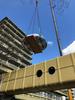
Endcap travel

Forward Endcap travels to Jülich

+++ Publication list +++
+++ Job Market +++

Subscribe to Recent news

PANDA meetings


05/03-07/03 2025 WS at GSI
24/03/2025 16.00 CM 25-ZOOM1
13/05/2025 16.00 CM 25-ZOOM2
16/06-18/06 2025 CM 25/1 at GSI
24/11-26/11 2025 CM25/2 at GSI


FAIR logo

GSI logo


Old website


E.g. simulation of detector components

Feasibility studies for the Forward Spectrometer
Jacek Biernat
jacek.b.biernat@gmail.com
PA-PRO-2014-014.pdf (1.26 MB)
Paper
Proceedings (PRO)
Detector hardware
Detector software
Monday, November 17, 2014 - 12:00
PA-PRO-2014-014: Feasibility studies for the Forward Spectrometer
The PANDA Experiment
Ralf Kliemt
TA-CON-2014-034.pdf (14.22 MB)
Talk
Conference (CON)
FAIRNESS 2014
Detector hardware
Detector software
Wednesday, September 24, 2014 - 12:00
The PANDA (anti-Proton ANnihiliation at DArmstadt) experiment will be a multi- purpose apparatus at the future Facility for Antiproton and Ion Research (FAIR) at Darmstadt. Anti-proton induced reactions with 1.5 to 15 GeV/c beam momentum at high luminosities of up to 2·1032/(s·cm2) will be investigated. Exclusive detection of whole events with almost 4π acceptance and high precision are needed for the broad physics program. The focus lies on studying the strong interaction in the charm region, by charmonium, open-charm and baryon spectroscopy, and includes the search for glueballs, hybrids and other exotics, hypernuclear physics, nucleon structure studies as well as in-medium modifications of hadrons.
GPU-based Online Tracking for the PANDA Experiment
Andreas Herten
a.herten@fz-juelich.de
PA-PRO-2014-012.pdf (1.31 MB)
Paper
Proceedings (PRO)
Detector software
Saturday, November 15, 2014 - 12:00
The PANDA experiment is a new hadron physics experiment currently being built at FAIR, Darmstadt (Germany). PANDA will study fixed-target collisions of antiprotons of 1 5 GeV/ c to 15 GeV/ c momentum with protons and nuclei at a rate of 20 million events per second. To distinguish between background and signal events, PANDA will utilize a novel data acquisition technique. The experiment uses a sophisticated software-based event filtering scheme involving the reconstruction of the whole incoming data stream in real- time to trigger its data taking. Algorithms for online track reconstruction are essential for this task. We investigate algorithms running on GPUs to solve PANDA’s real-time computing challenges
PA-PRO-2014-012: GPU-based Online Tracking for the PANDA Ex- periment
GPU-based Online Tracking for the PANDA experiment
Andreas Herten
a.herten@fz-juelich.de
TA-CON-2014-030.pdf (20.28 MB)
Talk
Conference (CON)
GPU Computing in High Energy Physics
Detector software
Thursday, September 11, 2014 - 12:00
I held this talk at the conference in September (at the same time as our collaboration meeting). Stefano gave his OK for the slides.

Actual abstract of my application:
The PANDA experiment (antiProton ANnihilation at DArmstadt) is a new hadron physics experiment currently being built at FAIR, Darmstadt (Germany). PANDA will study fixed-target collisions of phase space-cooled antiprotons of 1.5 to 15 GeV/c momentum with protons and nuclei at a rate of 20 million events per second.
To distinguish between background and signal events, PANDA will utilize a novel data acquisition mechanism. Instead of relying on fast hardware-level triggers initiating data recording, PANDA uses a sophisticated software-based event filtering scheme involving the reconstruction of the whole incoming data stream in realtime. A massive amount of computing power is needed in order to sufficiently reduce the incoming data rate of 200 GB/s to 3 PB/year for permanent storage and further offline analysis.
An important part of the experiment's online event filter is online tracking, giving the base for higher-level discrimination algorithms. To cope with PANDA's high data rate, we explore the feasibility of using GPUs for online tracking.
This talk presents the status of the three algorithms currently investigated for PANDA's GPU-based online tracking; a Hough transform, a track finder based on Riemann paraboloids, and a novel algorithm called the Triplet Finder. Their performances and different optimizations are shown. Currently having a processing time of 20 µs per event, the Triplet Finder in particular is a promising algorithm making online tracking on GPUs feasible for PANDA.
TA-CON-2014-030: GPU-based Online Tracking for the PANDA experiment
Simulation of the PANDA Lambda Disks
Ajay Kumar and Ankhi Roy
ankhi.roy@gmail.com
TA-POS-2014-024.pdf (1.37 MB)
Susan Schadmand
Talk
Poster (POS)
FAIR 2014
Detector hardware
Detector software
Monday, October 13, 2014 - 12:00
Using Antiprotons for High Precision Studies of Hadrons
J. Ritman
j.ritman
TA-CON-2014-020.pptx (34.51 MB)
Talk
Conference (CON)
FAIR 2014
Detector hardware
Detector software
Physics analysis
Thursday, October 9, 2014 - 12:00
Using Antiprotons for High Precision Studies of Hadrons

Recently, after decades of slow progress, numerous facilities worldwide have observed a large number of new hadronic states, some of them with very unusual properties. This includes clear evidence for the existence of exotic hadronic states, i.e. states that can not be reduced to either a simple meson or baryon description. Despite this great advance, the nature of many of these states remains debated. One potentially decisive approach to determine the nature of some of these states is to perform high precision measurements of their lineshape. Such lineshape measurements will be performed using the high intensity, phase space cooled antiproton beam of the High Energy Storage Ring at FAIR. By exploiting kinematic constraints that are available in both resonance and threshold scans, well over an order of magnitude higher precision results will be obtained compared to other facilities. These measurements will be performed by the PANDA experiment, which is a multipurpose detector for a wide range of final states from antiproton annihilation reactions in the charm quark mass range. In addition to precision measurements of exotic hadronic states, PANDA has a fascinating program ranging from (but not limited to) time-like studies of nucleon structure, spectroscopy of open charm mesons, as well multi-strange and charm baryons, to the in-medium properties of charm mesons and spectroscopy of (double)-Lambda hypernuclei.
This talk will present the physics reach of PANDA and the status for the detector construction.

TA-CON-2014-020: Ritman_Worms
Simulated Measurement of the Ds Meson Semileptonic Decay Form Factor with the PANDA Detector
Lu Cao and James Ritman
l.cao@fz-juelich.de
TA-POS-2014-016.pdf (4.72 MB)
Talk
Poster (POS)
37th International Conference on High Energy Physics (ICHEP 2014)
Detector software
Physics analysis
Monday, September 29, 2014 - 12:00
We simulate the anti-proton and proton interaction to evaluate the PANDA detector performance in the measurement
of the semileptonic decay form factor of $D^{+}_{s}->e^{+} \eta \nu_{e}$. The kinematics of the neutrino have been reconstructed with
a complete simulation model of the detector and reconstruction. With theoretical predictions of the cross section, we
obtain a preliminary estimate of the expected count rate for the future data taking.
TA-POS-2014-016: Simulated Measurement of the Ds Meson Semileptonic Decay Form …
Status of Day-1 experiment at HESR
Huagen Xu
h.xu@fz-juelich.de
TA-CON-2014-010.pdf (199.78 KB)
TA-CON-2014-010.pdf (4.78 MB)
Susan Schadmand
Talk
Conference (CON)
3rd International Conference on New Frontiers in Physics (ICNFP 2014)
Detector hardware
Detector software
Wednesday, August 13, 2014 - 12:00
The Detector Control of the PANDA Experiment
Florian Feldbauer
f.feldbauer
PA-PRO-2014-001.pdf (320.85 KB)
Lars Schmitt
Paper
Proceedings (PRO)
Detector hardware
Detector software
Friday, May 30, 2014 - 12:00
Instrumentation 2014 - The PANDA experiment will be build at the antiproton storage ring HESR, a part of
the new accelerator facility FAIR in Darmstadt, Germany. PANDA aims amongst others for high
precision measurements in hadron spectroscopy and search for exotic matter. To guarantee the high
resolution of the different components a detector control system (DCS) monitoring temperatures,
humidity, pressure, and controlling chillers and power supplies is needed. The DCS of PANDA is
build using the open-source software package EPICS (Experimental Physics and Industrial Control
System) with a PANDA specific version of Control-System Studio.
In this document the general conecepts of the PANDA DCS will be discussed.
PA-PRO-2014-001: The Detector Control of the PANDA Experiment
Simulations with the PANDA MVD
Ralf Kliemt
r.kliemt
TH-PHD-2013-005.pdf (15.14 MB)
Thesis
Phd (PHD)
Detector hardware
Detector software
Wednesday, July 17, 2013 - 12:00
The PANDA experiment will be built at the upcoming FAIR facility at GSI in Darmstadt, featuring antiproton-proton reactions hadron physics in a medium energy range. Charm physics will play an important role and therefore secondary decays relatively close to the interaction zone as well. The MVD will be the detector closest to these and will provide high-quality vertex position measurements. Alongside the detector layout and hardware development a detailed detector simulation and reconstruction software is required. This work contains the detailed description and the performance studies of the software developed for the MVD. Furthermore, vertexing tools are introduced and their performance is studied for the MVD.
Pagination
  • Previous page ‹‹
  • Page 16
  • Next page ››
Subscribe to Detector software

Imprint

Data privacy protection

Powered by Drupal

Copyright © 2025 PANDA collaboration - All rights reserved

Operated by Udo